
Looking to add a balcony to an outdoor space? You’re in the right place. Whether you’re a DIYer adding a stack balcony to your home or a specifier retrofitting tens of cantilevered balconies on a high-rise, we’ve got the information you need to decide which material is right for your project.
Balcony systems
Balconies come in all shapes and sizes, meaning you can find the system that works best for your application and desired aesthetic.
Walk-on balconies
One of the most popular designs, where the balcony floor extends beyond the building’s facade. Walk-on balconies are further broken down into the following categories:
- Cantilever: Where the structure (usually concrete or steel beams) is directly anchored into the building’s frame, so external supports aren’t visible. The result? A clean and contemporary balcony.
- Stacked: Columns or posts support the balcony’s weight, helping to spread load away from the main building’s structure.
- Suspended: A ‘floating’ design, where cables or tension rods are fixed to the structure above, holding the balcony in place.
Inset balconies
Instead of extending past the building’s facade, inset balconies are sheltered inside it.
Juliet balconies
Unlike other balconies, the Juliet doesn’t have any floor space to stand on. Instead, full-height doors or windows open onto a safety balustrade.
Balcony decking materials
Timber, plastic, composite, and aluminium are four of the most popular materials used for balcony boards in the UK. Use our table for an overview of each material.
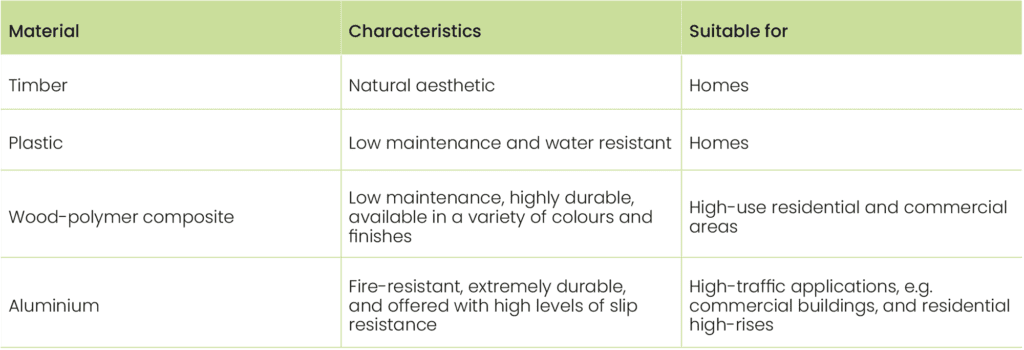
So, which material is best for your balcony?
Timber balconies
Generally considered the ‘traditional’ material on the market, timber has a natural, earthy aesthetic. The material gives more of a rugged finish to a balcony, but also brings care and maintenance demands. It’s prone to splintering and rotting, which makes it less durable than other materials.
Find out more about how it weighs up against composite, PVC, aluminium, and bamboo in our blog: Types of wood decking alternatives.
Plastic balconies (PVC)
Compared to timber, PVC balconies are low-maintenance and easy to clean, though they can become slippery when wet. While PVC boards can be a reliable, long-lasting option, they have lower structural strength than composite and aluminium, so they’re most suited to low-traffic, low-load areas.
More information can be found in our blog: Composite decking vs PVC decking.
Composite balconies
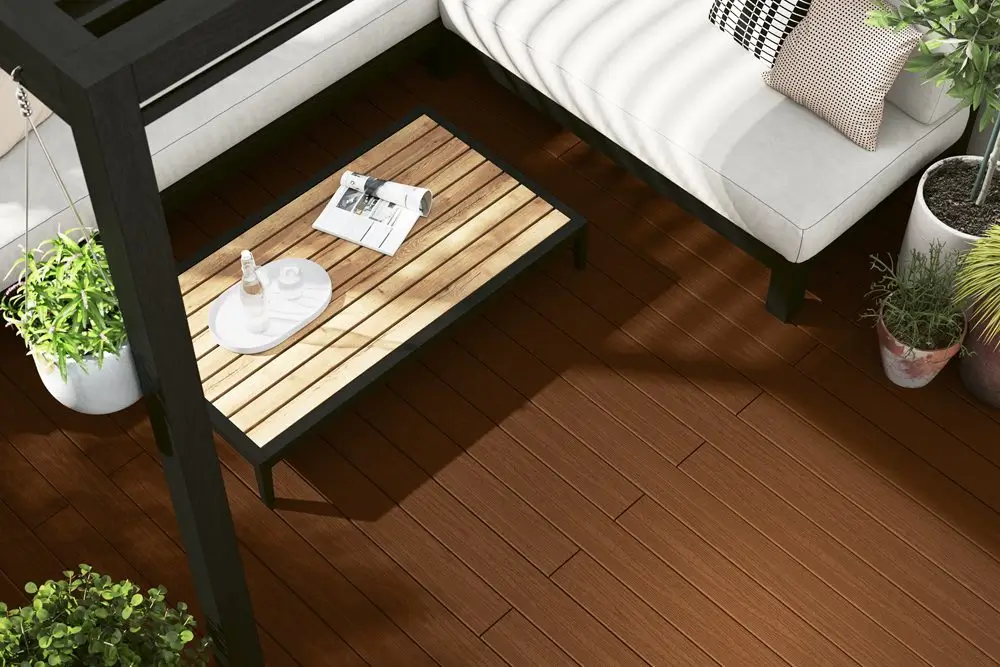
Balconies made from wood-polymer composite can be used across domestic and commercial applications. They’re low-maintenance, resistant to moisture, rot, and insects, and are available with different levels of slip resistance.
While they provide the structural performance needed for commercial applications, you’ll need to check with the manufacturer if they meet the relevant fire-ratings.
Composite balcony boards are offered in a range of colours and finishes, too, whether you’d like to mimic the traditional look of timber or embrace contemporary blacks or greys.
View composite boards by colour:
Aluminium balconies
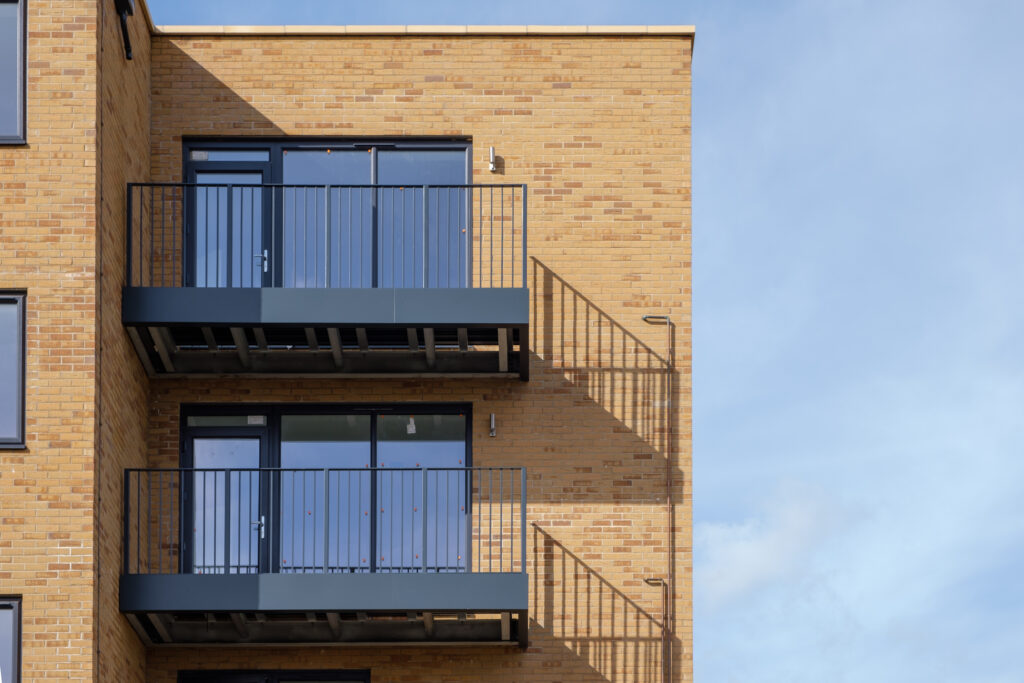
Aluminium boards are the go-to choice for balconies on commercial and high-rise buildings, thanks to their non-combustible nature and compliance with the required fire ratings. They offer excellent durability and load-bearing capacity, as well as being low-maintenance. The aluminium deck boards in our Adek system are offered with enhanced anti-slip features too, for extra peace of mind.
Applications of balcony decking systems
Now you understand the differences between the materials, consider the main use for the balcony. This will help you shortlist the most suitable material(s) out of timber, PVC, composite, and aluminium.
Creating additional living space
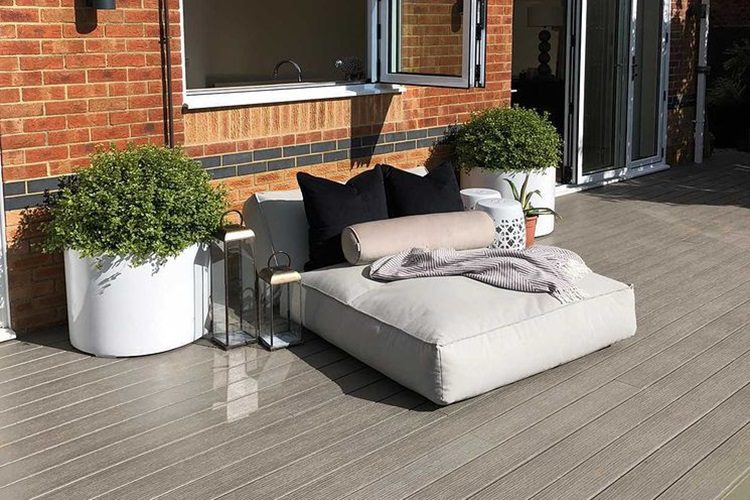
Lying back with a book, getting your craft on, or practising yoga? A timber balcony will offer a homely look and feel, but will need far more care and attention than a composite one. For the best of both worlds, consider wood-effect composite boards, which combine a woodgrain finish with low maintenance and longevity.
Hosting and entertaining

If you’re looking to add an outdoor space for socialising, a PVC balcony is simple and easy to keep clean. But when it comes to its structural performance, it’s not as durable as composite or aluminium, so it is more susceptible to wear and tear. With composite boards available in a variety of colourways and textures, you can create a modern and low-maintenance balcony that’s perfect for entertaining friends and family from day to night. View composite boards.
An alternate workspace
Who says a home office needs to be indoors? Turn your outdoor furniture into a desk fit for work, complete with lovely views and a gentle breeze. Composite is resistant to rotting, warping, and insects, so you can feel confident the balcony will remain in tip-top condition (and be the ideal Microsoft Teams background).
Acting as walkways between areas
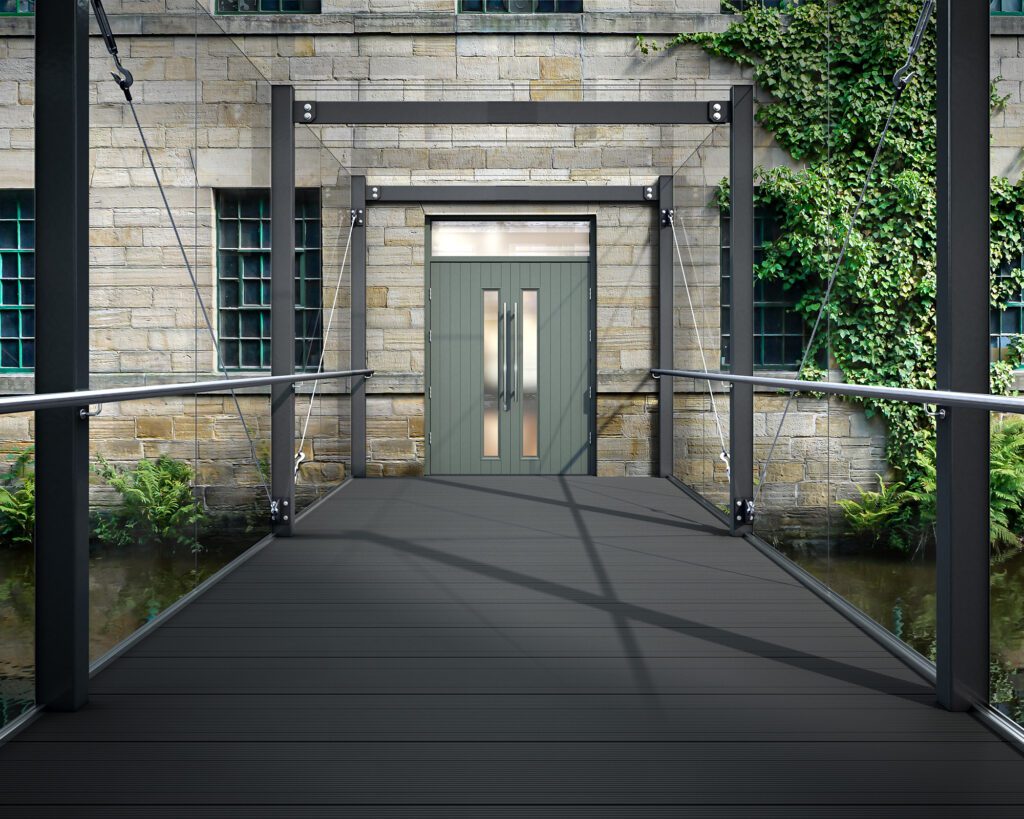
Connect different parts of a commercial space with a raised deck or balcony. Aluminium is the clear winner for this application, thanks to its non-combustible properties, low maintenance, and extreme durability. It’s also very straightforward to clean, needing only a sweep and mop to keep it looking as good as new.
For other ways to use aluminium boards in commercial settings, head to our blog: 5 commercial applications of aluminium decking.
Building regulations
Now you’ve checked your chosen boards are suited to your application, there are a couple of final pieces of the puzzle to consider: planning permission and compliance with building regulations.
The Planning Portal defines a balcony as a ‘platform with a rail, balustrade or parapet which extends outside the upper storey of a building’. Below, we’ve wrapped up the key regulations that domestic and commercial balconies must comply with, but we recommend you speak to a planning professional for more exhaustive information.
Building regulations for homes
Tempted to add a balcony to your home? Lovely! First things first, make sure to get planning advice you can trust. We suggest speaking with a design professional, like an architect. Typically speaking, balconies aren’t classed as ‘permitted development’ under planning law unless they are:
- Platforms no more than 300mm high
- A ‘Juliet’ balcony, which doesn’t have a platform
Before you start any work, you should ask for planning permission and/or written confirmation that you don’t need it. Otherwise, you may end up having to remove the balcony or facing a fine – or both!
What you’ll need to share
The Building Regulations generally control all work required to create a balcony. So, you’ll need Building Regulations approval, which will usually be classed as a ‘material alteration’ of the building. Depending on the type of balcony you’re looking to install, you’ll need to share numerous details with Building Control. These include, but aren’t limited to:
- The use and capacity of the balcony
- The height of the barrier
- The method of fixing the barrier
- The design of any foundations for posts or pillars
- The capacity and suitability of the existing building to support and restrain the balcony
For the full list, please refer to Local Authority Building Control.
Building regulations for residential high-rises and commercial buildings
There are several Building Regulations that balconies on both high-rises and commercial buildings must meet in the UK.
- Fire Safety (Part B: All balconies on buildings over 11m high must use non-combustible materials – for instance, Class A1 or A2-s1, d0.
- Structural Stability (Part A): The balcony needs to meet load requirements and comply with standards like BS 5080, EN 1090, and EN 1990.
- Barrier Safety (Part K and BS 6180): Balustrades must be at least 1,100mm high and must be able to prevent objects from passing through them.
- Accessibility and design: The balcony must comply with standards for safe and inclusive design (BS 8579:2020), as well as ‘usable balconies’, which cover thermal performance, wind loads, and acoustics.
- Building Safety Act 2022: This is the legislation that created a new regulatory framework to improve building safety, particularly for higher-risk buildings, such as high-rises. The Act mandates several strict fire safety requirements, including the use of non-combustible decking materials (Class A1 or A2 fire-rated) for balconies on high-rise residential buildings over 11m in height.
Support with decking for balconies
With all of this in mind, you should be set to start your balcony project. For more information about the different materials or for personalised advice for your application, our friendly team is happy to help.